
Mastering Your Mercedes: A Guide to Paddle Shifters
Quick Summary: Mercedes paddle shifters let you manually control gear changes for a sportier driving experience. Located behind the steering wheel, they offer quicker shifts and more control than the automatic transmission alone. Use them to downshift for extra power when overtaking or upshift for smoother cruising. With practice, you’ll enhance your driving enjoyment and vehicle control.
Ever feel like your Mercedes could be even more responsive? The paddle shifters are your secret weapon! They put you in direct control of gear changes, giving you a more engaging and dynamic driving experience. Many drivers find understanding and using paddle shifters a bit confusing at first. But don’t worry! This guide will walk you through everything you need to know, step-by-step. We’ll cover what they are, how to use them, and even some advanced techniques to get the most out of your Mercedes. Ready to take control?
What are Mercedes Paddle Shifters?

Mercedes-Benz paddle shifters are small levers located on the steering wheel, typically behind the left and right spokes. They allow you to manually shift gears in your automatic transmission without using a clutch. Think of them as a bridge between a fully automatic and a manual transmission, offering a blend of convenience and control.
Why Use Paddle Shifters?
Here’s why you might want to use paddle shifters:
- Enhanced Control: You decide when to shift, giving you more control over the engine’s RPM and power output.
- Sportier Driving: Paddle shifters allow for quicker gear changes than the automatic transmission alone, leading to a more engaging and responsive driving experience.
- Engine Braking: Downshifting with the paddles allows you to use the engine to slow down, reducing wear on your brakes, especially on steep declines.
- Overtaking: Quickly downshift for instant power when you need to overtake another vehicle.
- Improved Fuel Efficiency: In certain situations, you can use the paddles to select a higher gear and improve fuel economy.
Understanding the Basics
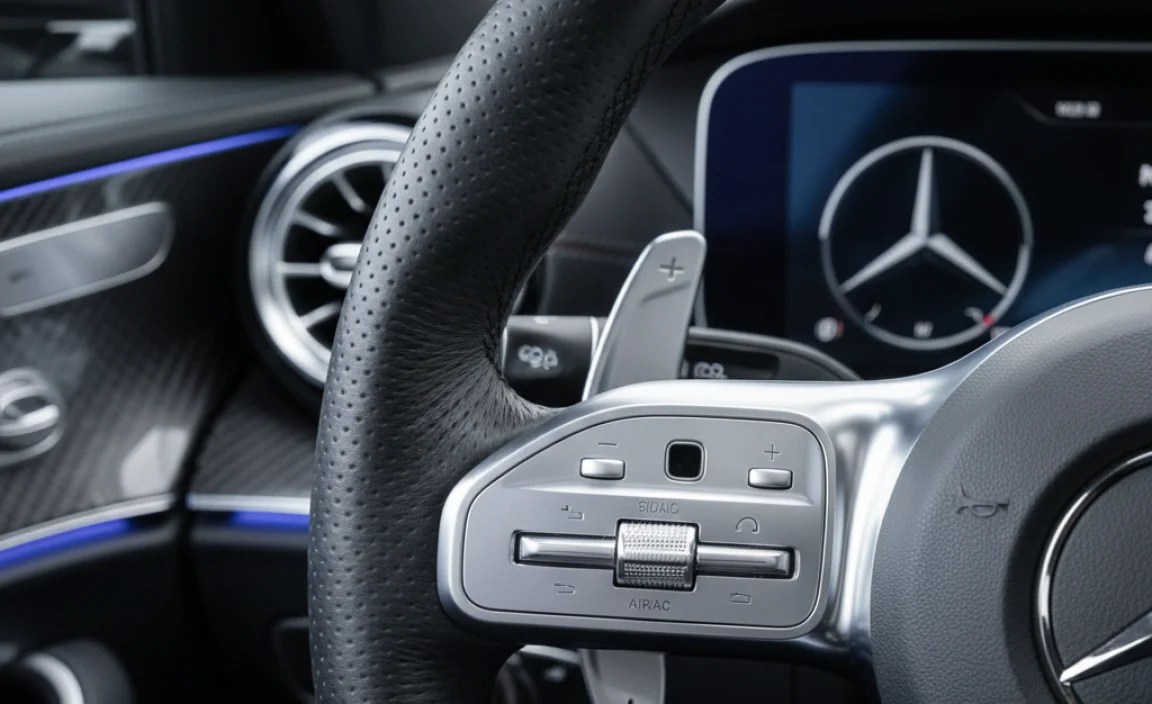
Before you start using paddle shifters, it’s important to understand how they work. Here’s a breakdown:
- “+” Paddle (Right Side): Pulling this paddle shifts the transmission up to the next higher gear.
- “-” Paddle (Left Side): Pulling this paddle shifts the transmission down to the next lower gear.
- Activation: In most Mercedes models, you need to put the car into “Manual” or “Sport” mode to activate the paddle shifters. This is usually done by moving the gear selector to the side or selecting a driving mode via a console button.
- Override: Even in “Manual” mode, the transmission will usually prevent you from over-revving the engine by automatically upshifting at the redline. It will also downshift automatically if the engine speed drops too low to prevent stalling.
Step-by-Step Guide to Using Paddle Shifters

Follow these steps to get started with your Mercedes paddle shifters:
- Start the Engine: Make sure your Mercedes is running.
- Engage “Manual” or “Sport” Mode: Shift the gear selector to the “Manual” position (usually indicated by “M”) or select “Sport” mode using the driving mode selector. Refer to your owner’s manual for the exact location and method for your specific model.
- Upshifting: To shift up, simply pull the “+” paddle on the right side of the steering wheel. You’ll feel a slight jolt as the transmission shifts to the next gear.
- Downshifting: To shift down, pull the “-” paddle on the left side of the steering wheel. The engine RPM will increase as you downshift.
- Practice: Find an open road with minimal traffic and practice upshifting and downshifting. Pay attention to the engine RPM and how the car responds to your inputs.
- Returning to Automatic Mode: To return to fully automatic mode, simply move the gear selector back to the “D” (Drive) position or select a different driving mode like “Comfort” or “Eco.”
Tips for Smooth Shifting

Here are some tips to help you master smooth shifting with paddle shifters:
- Listen to the Engine: Pay attention to the engine sound. As the RPMs rise, it’s time to upshift. Avoid letting the engine rev too high before shifting.
- Smooth Throttle Control: When upshifting, briefly ease off the accelerator pedal for a smoother transition. When downshifting, a slight “blip” of the throttle can help match the engine speed to the lower gear, preventing a jerky shift.
- Anticipate: Look ahead and anticipate when you’ll need to shift. This will allow you to make smooth and timely gear changes.
- Practice Makes Perfect: The more you practice, the more comfortable and confident you’ll become with using paddle shifters.
Advanced Techniques
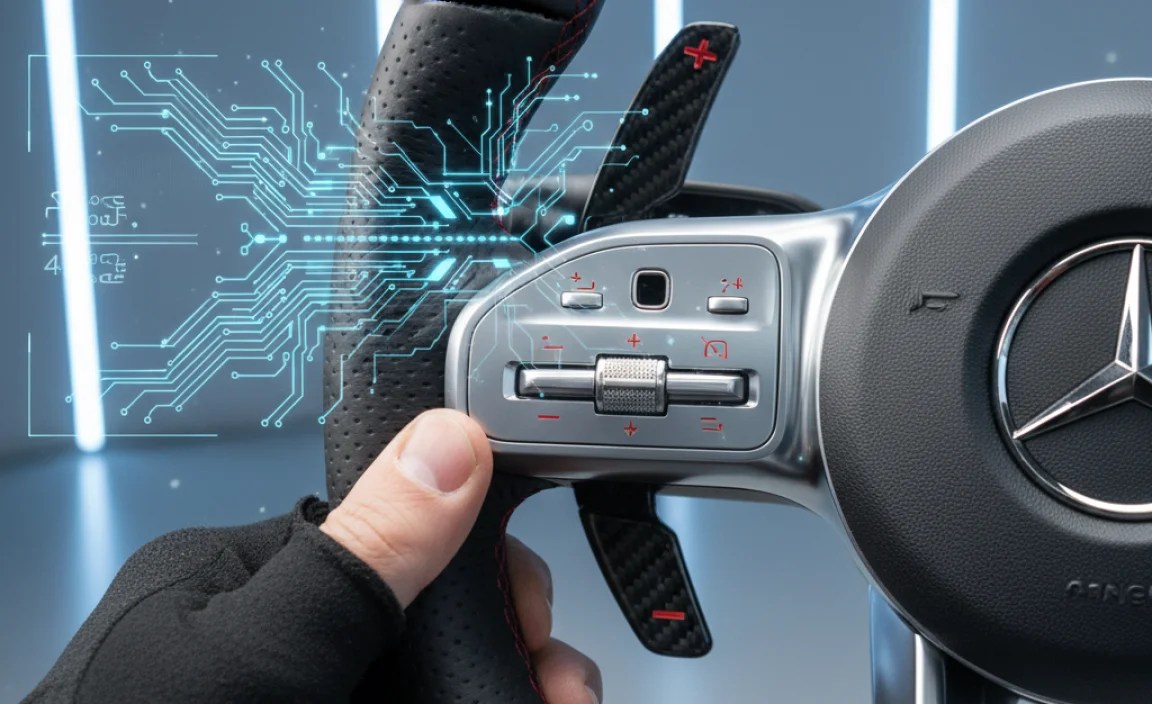
Once you’re comfortable with the basics, you can explore some advanced techniques:
- Engine Braking: Downshift before entering a turn to use engine braking to slow down. This can help improve control and reduce wear on your brakes.
- Rev Matching: When downshifting, briefly tap the accelerator pedal (“heel-toe” technique in manual cars, though simplified here) to match the engine speed to the lower gear. This will result in a smoother and more controlled downshift.
- Holding Gears: In certain situations, such as driving on a winding road, you may want to hold a gear longer to maintain optimal power and control.
Which Mercedes Models Have Paddle Shifters?
Paddle shifters are available on a wide range of Mercedes-Benz models, often as standard equipment on higher trim levels or as part of a sport package. Here’s a general overview (note: availability can vary by model year and region):
- AMG Models: Most AMG models come standard with performance-oriented paddle shifters.
- C-Class: Paddle shifters are often included in the AMG Line or with optional sport packages.
- E-Class: Similar to the C-Class, paddle shifters are frequently found with the AMG Line or sport packages.
- S-Class: Paddle shifters are typically standard or available as an option.
- GLC/GLE/GLS SUVs: Paddle shifters are often included in sport packages or on higher trim levels.
- CLA/GLA Coupes: Paddle shifters are usually available as part of a sport package.
To determine if your specific Mercedes model has paddle shifters, check the vehicle’s specifications, look for the paddles behind the steering wheel, or consult your owner’s manual.
Paddle Shifter Placement
Paddle shifters are strategically placed for easy access and intuitive use. They are typically mounted directly behind the steering wheel, within easy reach of your fingers while maintaining a firm grip. The “+” paddle is always on the right side, and the “-” paddle is on the left, mirroring the natural motion of upshifting and downshifting.
Troubleshooting Common Issues
Here are some common issues you might encounter with paddle shifters and how to troubleshoot them:
- Paddle Shifters Not Responding:
- Check Mode: Ensure the car is in “Manual” or “Sport” mode.
- Inspect Connections: In rare cases, the electrical connections to the paddles may be loose or damaged. This would require professional inspection.
- Jerky Shifts:
- Practice: Smooth shifting takes practice. Focus on coordinating throttle input with paddle shifts.
- Transmission Issues: If the problem persists, there may be an underlying issue with the transmission. Consult a qualified mechanic.
- Automatic Override:
- Normal Behavior: Remember that the transmission will automatically upshift or downshift to protect the engine. This is normal behavior.
Paddle Shifter Maintenance
Paddle shifters themselves typically require minimal maintenance. However, maintaining your transmission is crucial for optimal performance. Follow these tips:
- Regular Transmission Fluid Changes: Adhere to the recommended service intervals for transmission fluid changes. This will help keep your transmission running smoothly.
- Avoid Harsh Shifting: While paddle shifters are designed for sporty driving, avoid excessively harsh or abrupt shifts, as this can put unnecessary strain on the transmission.
Paddle Shifters vs. Manual Transmission
While paddle shifters offer manual control, they are not the same as a traditional manual transmission. Here’s a comparison:
| Feature | Paddle Shifters | Manual Transmission |
|---|---|---|
| Clutch Pedal | No clutch pedal | Requires a clutch pedal |
| Gear Changes | Electronically controlled | Mechanically controlled by the driver |
| Complexity | Simpler to operate | Requires more skill and coordination |
| Engagement | Less engaging than a manual transmission | More engaging and immersive driving experience |
| Availability | Available on a wider range of vehicles | Becoming less common |
Paddle Shifters and Driving Modes
Mercedes-Benz vehicles often offer different driving modes, such as “Comfort,” “Sport,” “Eco,” and “Individual.” The behavior of the paddle shifters can vary depending on the selected mode:
- Comfort: Paddle shifters may be less responsive in Comfort mode, prioritizing smooth and efficient driving.
- Sport: Paddle shifters will be more responsive in Sport mode, allowing for quicker and more aggressive gear changes.
- Eco: Paddle shifters may encourage earlier upshifts to maximize fuel efficiency.
- Individual: This mode allows you to customize various vehicle settings, including the responsiveness of the paddle shifters.
Experiment with different driving modes to find the settings that best suit your driving style and preferences.
Aftermarket Paddle Shifter Upgrades
If you want to further enhance the look and feel of your paddle shifters, several aftermarket upgrades are available. These can include:
- Extended Paddle Shifters: These paddles are longer than the factory paddles, providing easier access and a more tactile feel.
- Aluminum Paddle Shifters: Made from high-quality aluminum, these paddles offer a more premium and sporty appearance.
- Colored Paddle Shifters: Available in various colors, these paddles allow you to customize the interior of your Mercedes.
When choosing aftermarket paddle shifters, make sure they are compatible with your specific Mercedes model and are made from high-quality materials.
Safety Considerations
While using paddle shifters can enhance your driving experience, it’s important to prioritize safety:
- Focus on the Road: Always keep your eyes on the road and avoid distractions while using paddle shifters.
- Don’t Over-Rev: Avoid over-revving the engine, as this can damage the engine and transmission. The car will usually prevent this, but it’s still good practice.
- Be Aware of Your Surroundings: Pay attention to traffic conditions and adjust your driving accordingly.
- Start Slowly: If you’re new to paddle shifters, start slowly and gradually increase your speed and aggression as you become more comfortable.
FAQ About Mercedes Paddle Shifters
- What are paddle shifters?
- Paddle shifters are levers behind the steering wheel that let you manually change gears in an automatic transmission.
- How do I activate paddle shifters in my Mercedes?
- Usually, you need to put the car in “Manual” or “Sport” mode. Check your owner’s manual for the exact steps.
- Which paddle shifts up, and which shifts down?
- The right paddle (+) shifts up, and the left paddle (-) shifts down.
- Can I damage my car by using paddle shifters incorrectly?
- The car has safety features to prevent damage, but avoid over-revving the engine.
- Do all Mercedes models have paddle shifters?
- No, it varies by model and trim level. Check your vehicle’s specifications.
- Are paddle shifters better than letting the car shift automatically?
- They offer more control and a sportier feel, but automatic is more convenient for everyday driving.
- What if my paddle shifters aren’t working?
- Make sure you’re in the correct mode and consult a mechanic if the problem persists.
Conclusion
Mercedes paddle shifters are a fantastic way to elevate your driving experience, offering a blend of control and convenience. By understanding the basics, practicing regularly, and following these tips, you can master the art of paddle shifting and unlock the full potential of your Mercedes-Benz. So go ahead, take control, and enjoy the ride!
“`


