
Mercedes Radar Sensor Models: A Complete Guide
Quick Summary: Mercedes-Benz uses radar sensors for advanced driver-assistance systems (ADAS). These sensors, typically located in the front and rear bumpers, enable features like adaptive cruise control, blind-spot monitoring, and automatic emergency braking. Different models and model years may use slightly different sensor types, but the core function remains consistent: enhancing safety and convenience.
Ever wondered how your Mercedes-Benz seems to “see” the world around it, adjusting speed, alerting you to hazards, and even braking automatically? The secret lies in its sophisticated network of radar sensors. These sensors are crucial for modern safety and convenience features. Understanding these components can seem daunting. This guide breaks down everything you need to know about Mercedes radar sensor models, their functions, and how they contribute to a safer driving experience. Let’s dive in and demystify this essential technology.
What Are Radar Sensors and Why Are They Important?

Radar sensors are a key part of modern vehicle safety systems. They use radio waves to detect the distance, speed, and angle of objects around your car. Here’s why they’re so important:
- Enhanced Safety: Radar sensors power features like automatic emergency braking, helping to prevent accidents.
- Driver Assistance: They enable adaptive cruise control, making highway driving more relaxed.
- Convenience: Features like blind-spot monitoring make lane changes safer and easier.
Common Mercedes-Benz Radar Sensor Locations

Mercedes-Benz vehicles typically have radar sensors in the following locations:
- Front Bumper: Used for adaptive cruise control and collision avoidance.
- Rear Bumper: Supports blind-spot monitoring and rear cross-traffic alert.
- Side Mirrors: Some models have sensors integrated into the side mirrors for enhanced blind-spot detection.
Understanding Different Mercedes-Benz Radar Sensor Models

While Mercedes-Benz doesn’t always publicize specific radar sensor part numbers for each model, here’s a general overview of the types and functions you’ll find:
Front Radar Sensors
These sensors are critical for features that manage the car’s speed and distance from other vehicles.
- Long-Range Radar: Detects vehicles far ahead, enabling adaptive cruise control to maintain a set speed and following distance.
- Mid-Range Radar: Provides more detailed information about vehicles closer to the car, assisting with collision avoidance.
Rear Radar Sensors
These sensors primarily assist with detecting vehicles approaching from the side or rear.
- Blind Spot Monitoring: Alerts you when a vehicle is in your blind spot.
- Rear Cross-Traffic Alert: Warns you of approaching vehicles when backing out of a parking space.
Key Features Enabled by Radar Sensors

Radar sensors are the backbone of many advanced driver-assistance systems (ADAS) in Mercedes-Benz vehicles. Here’s a closer look at some of these features:
- Adaptive Cruise Control (ACC): Automatically adjusts your car’s speed to maintain a safe distance from the vehicle ahead.
- Automatic Emergency Braking (AEB): Detects potential collisions and automatically applies the brakes to mitigate or avoid an impact.
- Blind Spot Monitoring (BSM): Alerts you to vehicles in your blind spot, helping to prevent lane-change accidents.
- Lane Keeping Assist (LKA): Helps keep your vehicle in its lane by providing gentle steering corrections or warnings.
- Rear Cross-Traffic Alert (RCTA): Warns you of approaching vehicles when backing out of a parking space, improving safety in tight situations.
Troubleshooting Common Radar Sensor Issues
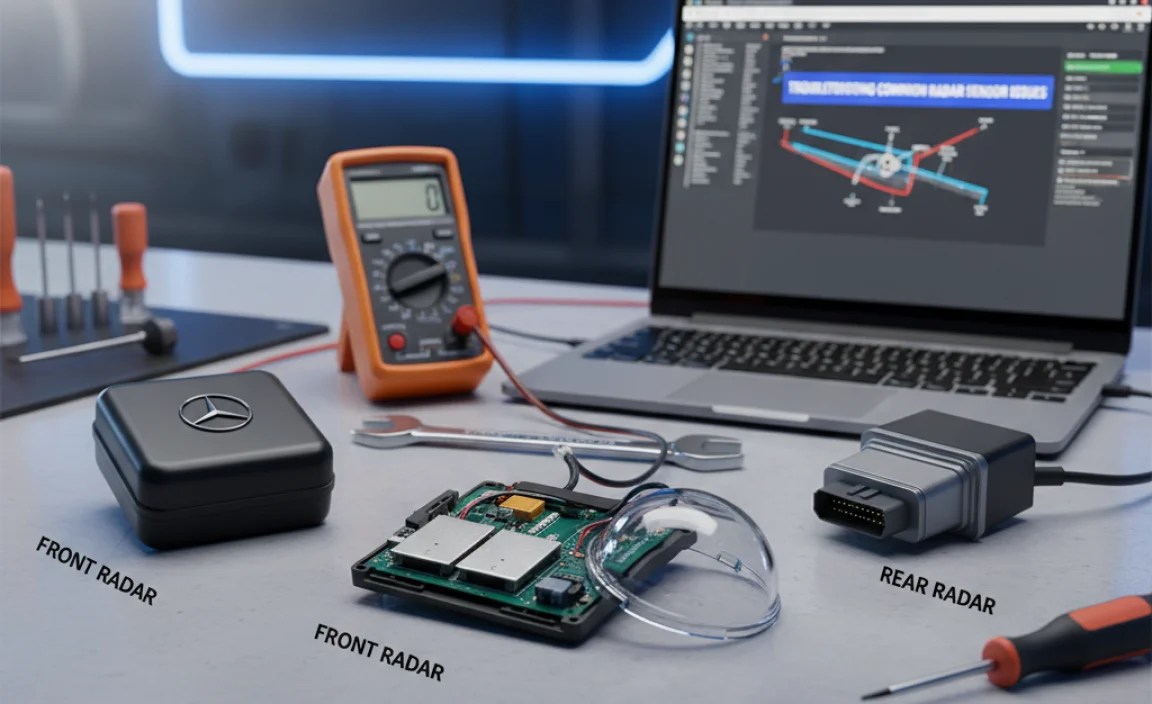
Like any electronic component, radar sensors can sometimes malfunction. Here are some common issues and how to address them:
- Sensor Blockage: Dirt, snow, or ice can block the sensors, causing them to malfunction. Clean the sensors regularly to ensure they have a clear view.
- Sensor Misalignment: If a sensor is misaligned, it may not detect objects accurately. This can happen after a collision or even a minor fender-bender. A Mercedes-Benz service center can recalibrate the sensors.
- Electrical Problems: Damaged wiring or a faulty connection can prevent a sensor from working correctly. Inspect the wiring and connections, or have a professional do it for you.
- Software Glitches: Sometimes, a software update can resolve issues with radar sensors. Make sure your car’s software is up to date.
DIY vs. Professional Repair: When to Seek Help
While some issues, like cleaning a blocked sensor, can be easily addressed at home, others require professional attention. Here’s a guide:
- DIY-Friendly:
- Cleaning sensors
- Checking for loose connections
- Professional Help Recommended:
- Sensor recalibration
- Electrical repairs
- Software updates
Cost of Replacing or Repairing Radar Sensors
The cost of replacing or repairing radar sensors can vary depending on the model and the extent of the damage. Here’s a general idea:
- Replacement: A new radar sensor can cost anywhere from $500 to $2,000, depending on the model and location.
- Labor: Labor costs can range from $100 to $500, depending on the complexity of the job.
- Recalibration: After replacing a sensor, recalibration is typically required. This can cost an additional $200 to $500.
Mercedes-Benz Radar Sensor Models: Detailed Overview
Here is a detailed look at specific Mercedes-Benz models and their radar sensor configurations. Note that this information can vary based on the model year and specific trim level.
C-Class (W205, W206)
The C-Class uses a combination of front, rear, and corner radar sensors to support its ADAS features.
- Front: Long-range radar for adaptive cruise control and collision prevention.
- Rear: Short-range radar for blind-spot monitoring and rear cross-traffic alert.
E-Class (W213, W214)
The E-Class has a more advanced radar system, offering enhanced performance and accuracy.
- Front: Multi-mode radar with both long-range and mid-range capabilities.
- Rear: High-resolution radar for improved blind-spot detection.
- Side: Some models include side-mounted radar for additional safety features.
S-Class (W222, W223)
The S-Class, as the flagship sedan, features the most sophisticated radar technology.
- Front: Advanced long-range radar with extended detection range.
- Rear: High-precision radar with enhanced object recognition.
- Corner: Additional corner radar sensors for 360-degree awareness.
GLC and GLE SUVs
These SUVs use similar radar technology to the C-Class and E-Class, respectively, with adjustments for their larger size and higher ride height.
- Front: Long-range radar for adaptive cruise control and collision prevention.
- Rear: Short-range radar for blind-spot monitoring and rear cross-traffic alert.
Radar Sensor Placement by Model Table
Here’s a table summarizing typical radar sensor placement across various Mercedes-Benz models:
| Model | Front Radar | Rear Radar | Side Radar |
|---|---|---|---|
| C-Class (W205, W206) | Long-Range | Short-Range | No |
| E-Class (W213, W214) | Multi-Mode | High-Resolution | Some Models |
| S-Class (W222, W223) | Advanced Long-Range | High-Precision | Yes (Corner) |
| GLC | Long-Range | Short-Range | No |
| GLE | Multi-Mode | High-Resolution | Some Models |
Tips for Maintaining Your Mercedes-Benz Radar Sensors
Proper maintenance can extend the life and effectiveness of your radar sensors. Here are some tips:
- Keep Sensors Clean: Regularly clean the sensors with a soft cloth and mild detergent.
- Avoid Pressure Washing: Do not use high-pressure washers directly on the sensors.
- Check for Damage: Inspect the sensors regularly for any signs of physical damage.
- Address Issues Promptly: If you notice any issues with your ADAS features, have the sensors checked by a professional.
How Radar Sensors Enhance Safety
Radar sensors play a crucial role in enhancing vehicle safety. Here’s how:
- Collision Avoidance: By detecting potential collisions early, radar sensors give you more time to react and avoid accidents.
- Reduced Driver Fatigue: Adaptive cruise control reduces the mental workload on long drives, helping to prevent fatigue.
- Improved Visibility: Blind-spot monitoring helps you see vehicles that may be hidden from your view, making lane changes safer.
Mercedes-Benz Radar Sensor Technology: The Future
Mercedes-Benz continues to innovate in radar sensor technology. Future developments may include:
- Higher Resolution: More detailed and accurate object detection.
- Increased Range: Longer detection ranges for earlier warnings.
- Integration with Other Sensors: Combining radar with cameras and lidar for a more comprehensive view of the surroundings.
Mercedes-Benz Radar Sensor: Range Table
Here’s a table summarizing the approximate detection ranges of different types of radar sensors used in Mercedes-Benz vehicles:
| Sensor Type | Approximate Range | Typical Use |
|---|---|---|
| Long-Range Radar | Up to 250 meters | Adaptive Cruise Control, Collision Warning |
| Mid-Range Radar | Up to 80 meters | City Driving Assistance, Emergency Braking |
| Short-Range Radar | Up to 30 meters | Blind Spot Monitoring, Rear Cross-Traffic Alert |
External Resources for Further Reading
For more in-depth information on radar sensor technology and Mercedes-Benz safety features, check out these resources:
- National Highway Traffic Safety Administration (NHTSA)
- Insurance Institute for Highway Safety (IIHS)
- Mercedes-Benz Official Website
FAQ About Mercedes-Benz Radar Sensors
Here are some frequently asked questions about Mercedes-Benz radar sensors:
1. What is a radar sensor in a Mercedes-Benz?
A radar sensor uses radio waves to detect the distance, speed, and angle of objects around your car. It’s used for safety and driver assistance features.
2. Where are the radar sensors located on my Mercedes-Benz?
Typically, radar sensors are located in the front and rear bumpers, and sometimes in the side mirrors.
3. How do I clean my Mercedes-Benz radar sensors?
Use a soft cloth and mild detergent to gently clean the sensors. Avoid using high-pressure washers.
4. What happens if a radar sensor is blocked?
If a radar sensor is blocked by dirt, snow, or ice, it may not function correctly. This can disable certain safety features.
5. How much does it cost to replace a radar sensor on a Mercedes-Benz?
The cost can range from $500 to $2,000 for the sensor itself, plus labor and recalibration costs.
6. Can I replace a radar sensor myself?
While you can clean the sensors yourself, replacing and recalibrating them is best left to a professional due to the complexity and precision required.
7. What features rely on radar sensors?
Features like adaptive cruise control, automatic emergency braking, blind-spot monitoring, and rear cross-traffic alert rely on radar sensors.
Conclusion
Understanding the radar sensor models in your Mercedes-Benz can empower you to better maintain your vehicle and appreciate its advanced safety features. From adaptive cruise control to blind-spot monitoring, these sensors are critical for a safer and more convenient driving experience. While some maintenance tasks can be handled at home, it’s important to seek professional help for more complex issues like sensor replacement or recalibration. By staying informed and proactive, you can ensure that your Mercedes-Benz continues to provide the exceptional performance and safety you expect. Safe travels!
“`


