Mercedes Reliability by Model: Which Ones Last?
Mercedes-Benz vehicles are known for luxury and performance, but reliability can vary. Some models are more dependable than others. Knowing which models have fewer issues can help you make a smart choice, whether you’re buying new or used.
Thinking about buying a Mercedes-Benz? You probably want a car that’s not only stylish and fun to drive but also reliable. It can be frustrating to deal with constant repairs. This guide will help you understand which Mercedes models are known for their reliability and which ones might give you more trouble. We’ll break down the reliability of different models, common problems, and tips for keeping your Mercedes in top shape. Let’s dive in and help you find the most reliable Mercedes-Benz for your needs.
Understanding Mercedes-Benz Reliability

Mercedes-Benz has a reputation for luxury and engineering, but reliability can be a mixed bag. Several factors influence how reliable a particular model is.
Factors Affecting Reliability
- Model Year: Newer models may have advanced technology, but they can also have more initial issues. Older models might have simpler designs but could suffer from wear and tear.
- Engine Type: Some engines are inherently more reliable. For example, simpler, naturally aspirated engines often outlast turbocharged ones.
- Maintenance: Regular maintenance is crucial. A well-maintained Mercedes-Benz will almost always be more reliable than one that has been neglected.
- Driving Habits: Aggressive driving can strain the engine and other components, reducing reliability.
Reliability Ratings and Surveys
Several organizations provide reliability ratings. Here are a few:
- J.D. Power: They conduct annual Vehicle Dependability Studies (VDS) that measure problems experienced by original owners of three-year-old vehicles.
- Consumer Reports: They survey their members about issues they’ve had with their vehicles.
- RepairPal: They offer reliability ratings based on the frequency and severity of repairs, as well as the average cost.
Most Reliable Mercedes-Benz Models

While reliability can vary, some Mercedes-Benz models consistently score well. Here’s a look at some of the most reliable options.
C-Class
The Mercedes-Benz C-Class is often praised for its blend of luxury and reliability. It’s a popular choice among buyers looking for a compact executive car.
Why It’s Reliable
- Consistent Performance: The C-Class has a history of solid performance and fewer reported issues compared to some other models.
- Balanced Engineering: It strikes a good balance between advanced technology and proven mechanical components.
- Wide Availability of Parts: Parts are readily available, making maintenance and repairs easier.
Potential Issues
Even the reliable C-Class can have some issues:
- Electrical Problems: Some owners have reported minor electrical glitches.
- Sensor Failures: Issues with sensors, such as the oxygen sensor, can occur.
E-Class
The E-Class is known for its comfort, technology, and, in many model years, its reliability. It’s a mid-size luxury car that appeals to a wide range of buyers.
Why It’s Reliable
- Robust Build Quality: The E-Class is generally well-built with high-quality materials.
- Advanced Safety Features: Many advanced safety features are standard, enhancing overall reliability by preventing accidents.
- Good Maintenance Record: Owners often report fewer major issues when the car is properly maintained.
Potential Issues
Like any car, the E-Class isn’t perfect:
- Air Suspension Problems: Models with air suspension can sometimes experience issues.
- Electronic Component Failures: Some electronic components may fail over time.
GLC
The GLC is Mercedes-Benz’s compact SUV, offering a blend of practicality and luxury. It has gained a reputation for being relatively reliable.
Why It’s Reliable
- Modern Technology: The GLC incorporates modern technology that is generally reliable.
- Comfortable Ride: Its comfortable ride reduces wear and tear on components.
- Good Safety Ratings: High safety ratings contribute to its overall dependability.
Potential Issues
Keep an eye out for these potential problems:
- Infotainment System Glitches: Some users have reported occasional glitches with the infotainment system.
- Turbocharger Issues: In some models, the turbocharger can experience problems.
Less Reliable Mercedes-Benz Models

Not all Mercedes-Benz models have stellar reliability records. Here are a few that tend to have more issues.
CLA
The CLA is a stylish entry-level sedan that appeals to younger buyers. However, it has faced some reliability challenges.
Why It Might Be Less Reliable
- Complex Systems: The CLA includes complex systems that can be prone to failure.
- Higher Repair Costs: Repairs can be more expensive due to the car’s design.
Common Problems
- Transmission Issues: Some owners have reported problems with the transmission.
- Electrical Problems: Electrical issues are more common in the CLA.
M-Class/GLE
The M-Class (now GLE) is a mid-size SUV that has had mixed reliability reviews over the years.
Why It Might Be Less Reliable
- Previous Model Issues: Older M-Class models had a history of reliability problems.
- Complex Electronics: The GLE has many electronic features that can fail.
Common Problems
- Air Suspension Problems: Air suspension issues are a recurring theme.
- Oil Leaks: Oil leaks can be a problem in certain model years.
S-Class
The S-Class is the flagship sedan, packed with technology and luxury. However, its complexity can lead to reliability issues.
Why It Might Be Less Reliable
- Advanced Technology: The sheer amount of technology can lead to more things going wrong.
- High Maintenance Costs: Repairs and maintenance can be very expensive.
Common Problems
- Electrical System Issues: The advanced electrical system can be problematic.
- Infotainment System Failures: The complex infotainment system can sometimes fail.
Model-Specific Reliability Issues
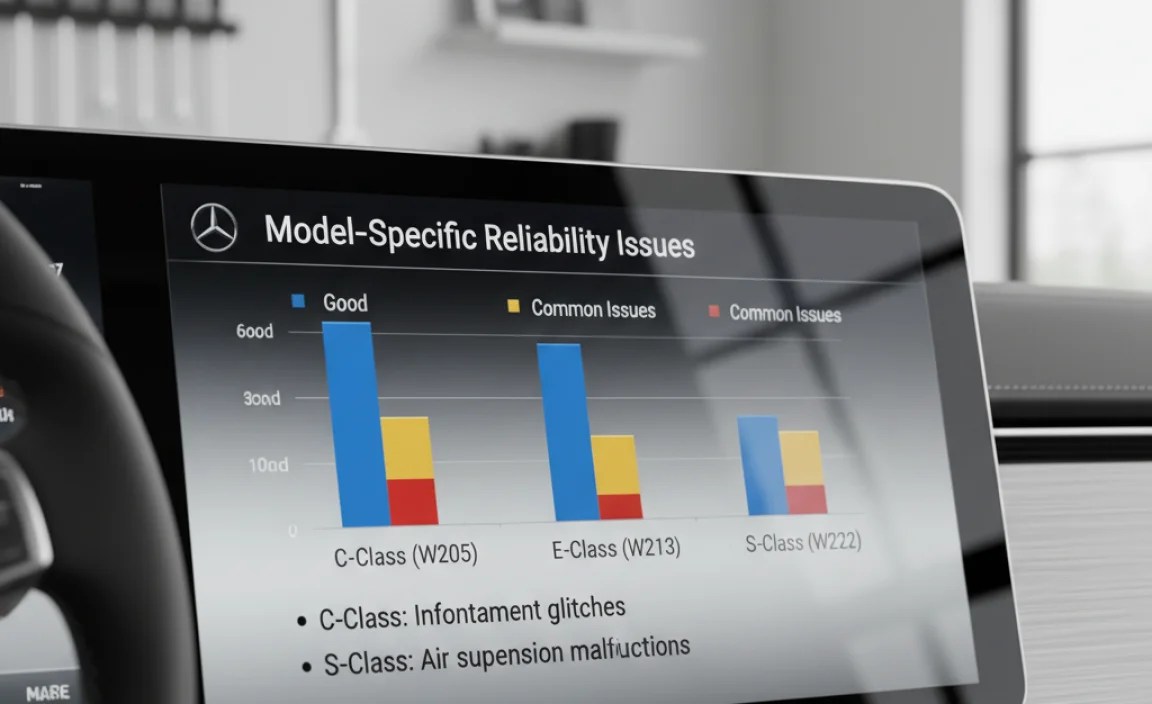
Let’s take a closer look at some of the common issues that affect specific Mercedes-Benz models.
| Model | Common Issues | Potential Solutions |
|---|---|---|
| C-Class | Electrical problems, sensor failures | Regular diagnostics, replace faulty sensors |
| E-Class | Air suspension problems, electronic component failures | Inspect air suspension regularly, replace failing electronic components |
| GLC | Infotainment system glitches, turbocharger issues | Update software, inspect and replace turbocharger if needed |
| CLA | Transmission issues, electrical problems | Regular transmission service, diagnose and fix electrical issues |
| M-Class/GLE | Air suspension problems, oil leaks | Inspect air suspension, fix oil leaks promptly |
| S-Class | Electrical system issues, infotainment system failures | Regular diagnostics, update infotainment software |
Tips for Improving Mercedes-Benz Reliability

No matter which Mercedes-Benz you own, there are steps you can take to improve its reliability.
Regular Maintenance
- Follow the Maintenance Schedule: Stick to the manufacturer’s recommended maintenance schedule.
- Use Quality Parts: Use OEM (Original Equipment Manufacturer) or high-quality aftermarket parts.
- Check Fluids Regularly: Monitor oil, coolant, brake fluid, and other fluids.
Driving Habits
- Avoid Aggressive Driving: Gentle acceleration and braking can reduce wear and tear.
- Warm-Up the Engine: Let the engine warm up before driving hard.
- Proper Cool-Down: Allow the turbocharger to cool down after a long drive.
Addressing Issues Promptly
- Don’t Ignore Warning Lights: Address any warning lights immediately.
- Regular Inspections: Have your car inspected regularly by a trusted mechanic.
- Keep Records: Keep detailed records of all maintenance and repairs.
Mercedes-Benz Maintenance Costs
Maintenance costs can be a significant factor in the overall ownership experience. Here’s what you can expect.
Average Maintenance Costs
Mercedes-Benz vehicles generally have higher maintenance costs than non-luxury brands. According to RepairPal, the average annual maintenance cost for a Mercedes-Benz is around $908. This includes routine maintenance and repairs.
Factors Affecting Costs
- Model: Some models are more expensive to maintain than others.
- Age: Older cars typically require more maintenance.
- Location: Labor rates can vary by location.
Ways to Reduce Costs
- Shop Around: Get quotes from multiple mechanics.
- DIY: Perform basic maintenance tasks yourself.
- Extended Warranty: Consider an extended warranty to cover unexpected repairs.
Mercedes-Benz Reliability Compared to Other Brands
How does Mercedes-Benz reliability stack up against other luxury brands?
Comparison with BMW and Audi
Mercedes-Benz, BMW, and Audi are often compared. Here’s a quick overview:
- BMW: BMW often scores similarly to Mercedes-Benz in reliability surveys. Both brands can have issues with electrical systems and complex components.
- Audi: Audi tends to have slightly better reliability ratings than Mercedes-Benz. However, maintenance costs can be similar.
Comparison with Lexus and Acura
Lexus and Acura are known for their reliability. Here’s how they compare:
- Lexus: Lexus consistently ranks higher in reliability surveys than Mercedes-Benz. Lexus vehicles are known for their durability and lower maintenance costs.
- Acura: Acura also tends to be more reliable than Mercedes-Benz. Acura offers a good balance of luxury and reliability.
Making an Informed Decision
Choosing a reliable Mercedes-Benz involves careful consideration. Here’s how to make an informed decision.
Researching Specific Model Years
Reliability can vary from year to year. Research specific model years to identify any recurring issues. Websites like Consumer Reports and J.D. Power can provide valuable information.
Checking Vehicle History Reports
Always check the vehicle history report before buying a used Mercedes-Benz. This can reveal any accidents, maintenance records, and other important information.
- Carfax: Provides detailed vehicle history reports.
- AutoCheck: Offers similar information and can help identify potential problems.
Getting a Pre-Purchase Inspection
Have a trusted mechanic inspect the car before you buy it. This can help identify any hidden issues that could cost you money down the road.
- Find a Qualified Mechanic: Look for a mechanic who specializes in Mercedes-Benz vehicles.
- Comprehensive Inspection: Ensure the inspection covers all major systems, including the engine, transmission, brakes, and suspension.
FAQ About Mercedes-Benz Reliability
Here are some frequently asked questions about Mercedes-Benz reliability.
Are Mercedes-Benz cars reliable?
Reliability varies by model and year. Some models, like the C-Class and E-Class, are generally considered more reliable. Regular maintenance is key to keeping any Mercedes-Benz in good condition.
Which Mercedes-Benz model is the most reliable?
The Mercedes-Benz C-Class and E-Class often receive high reliability ratings. They balance luxury with dependable performance.
What are the most common problems with Mercedes-Benz vehicles?
Common issues include electrical problems, air suspension issues, and infotainment system glitches. Specific problems can vary by model and year.
How does Mercedes-Benz reliability compare to BMW?
Mercedes-Benz and BMW often have similar reliability ratings. Both brands can experience issues with complex systems and electronics.
Is it expensive to maintain a Mercedes-Benz?
Yes, Mercedes-Benz vehicles generally have higher maintenance costs than non-luxury brands. Using quality parts and following the maintenance schedule can help manage costs.
What can I do to improve the reliability of my Mercedes-Benz?
Regular maintenance, careful driving habits, and addressing issues promptly can improve reliability. Use quality parts and keep detailed maintenance records.
Are older Mercedes-Benz models more reliable?
Older models might have simpler designs but can suffer from wear and tear. Newer models have advanced technology, but some can have initial issues. Researching specific model years is important.
Conclusion
Choosing a Mercedes-Benz involves balancing luxury, performance, and reliability. While some models are more prone to issues than others, regular maintenance and careful driving habits can improve the lifespan of any Mercedes-Benz. By researching specific model years, checking vehicle history reports, and getting pre-purchase inspections, you can make an informed decision and enjoy the Mercedes-Benz experience with greater peace of mind. So, take the time to do your homework, and you’ll be well on your way to owning a reliable and enjoyable Mercedes-Benz.
“`