
Mercedes A Class cornering stability features
Have you ever felt like your car was glued to the road? Some cars have special features. These features help them stay steady. They make turning corners easier and safer. Today, we will learn about Mercedes A Class cornering stability features. These features help drivers stay in control. They make driving more fun and safe.
Imagine you are driving on a twisty road. The road has lots of turns. You want to feel confident. You want your car to handle well. The Mercedes A Class has cool tech. It helps you stay safe. It keeps the car stable.
Let’s explore how these features work. We’ll see how they make a big difference. Get ready to learn about staying safe on the road.
Key Takeaways
- Mercedes A Class cornering stability features enhance driving confidence and safety.
- Electronic Stability Control (ESC) helps prevent skidding by applying brakes to individual wheels.
- Torque Vectoring improves handling by distributing power to the wheels that need it most.
- The car’s suspension system is designed for optimal grip and reduced body roll.
- Advanced driver-assistance systems provide extra support in challenging driving situations.
Mercedes A Class: Enhanced Stability

The Mercedes A Class is known for its excellent handling. It has many features that help with stability. These features make driving safer and more fun. One of the most important is Electronic Stability Control (ESC). ESC helps prevent skidding. It does this by applying brakes to individual wheels. If the car starts to lose control, ESC steps in. It gently corrects the car’s path. This can be a lifesaver in slippery conditions. Another key feature is the car’s suspension system. The suspension is designed to keep the tires on the road. This gives the driver better control. It also reduces body roll when turning. This means the car leans less in corners. The result is a smoother, more confident driving experience. With these features, the Mercedes A Class offers great stability.
- Electronic Stability Control (ESC) is a key safety feature.
- ESC helps prevent skidding on slippery roads.
- The suspension system improves tire grip.
- Reduced body roll makes turning smoother.
- These features enhance driver confidence.
The Mercedes A Class also uses advanced technology. This tech works behind the scenes to keep you safe. One example is Torque Vectoring. Torque Vectoring sends power to the wheels that need it most. When turning, the outside wheels need more power. Torque Vectoring makes sure they get it. This helps the car turn more easily and accurately. It also reduces understeer, which is when the car wants to keep going straight. The Mercedes A Class combines these features for a safer, more enjoyable drive. These features work together. They give drivers better control. You can feel confident behind the wheel. This is true no matter the road conditions.
How Does ESC Work?
Have you ever wondered how ESC works? It’s like having a super-smart co-driver. ESC uses sensors to monitor the car’s direction. It also checks the steering wheel position. If the car starts to go in a different direction than the driver intends, ESC kicks in. It applies the brakes to one or more wheels. This creates a turning force. The force helps bring the car back on course. ESC works very quickly. It can make corrections in milliseconds. This makes it hard for the driver to even notice it working. ESC is a valuable safety feature. It helps prevent accidents. It is especially helpful in bad weather. Think of it as an invisible safety net. It is always there to help you stay in control.
The Importance of Suspension
Why is the suspension so important? The suspension connects the wheels to the car’s body. It has a big job. It needs to keep the tires in contact with the road. This gives you the best possible grip. A good suspension also absorbs bumps and vibrations. This makes the ride smoother and more comfortable. The Mercedes A Class has a carefully tuned suspension. It balances comfort and handling. It uses special springs and dampers. These parts work together to control the car’s movements. A well-designed suspension system makes a big difference. It improves safety and enjoyment while driving. It helps the car feel stable and planted on the road.
Torque Vectoring Explained
Torque Vectoring sounds complicated. But it’s a simple idea. Imagine you’re pushing a shopping cart. If you want to turn right, you push harder on the left side. Torque Vectoring does something similar. It sends more power to the outside wheels when turning. This helps the car rotate. It makes the car turn more easily. This can be very helpful on twisty roads. It makes the car feel more responsive. Torque Vectoring also helps with traction. If one wheel starts to slip, it sends power to the other wheel. This helps maintain grip. It keeps the car moving forward. Torque Vectoring is another way. The Mercedes A Class stays stable and in control.
Fun Fact or Stat: ESC can reduce accidents by up to 35%!
Understanding Electronic Stability Control

Electronic Stability Control (ESC) is a key safety feature. It is in the Mercedes A Class. ESC helps prevent skidding. It monitors the car’s direction. It also watches the steering wheel. If the car starts to slide, ESC takes action. It applies brakes to individual wheels. This helps the driver regain control. ESC works quickly and automatically. It can make a big difference in an emergency. Many drivers may not even realize it’s working. ESC is especially useful on slippery roads. It can help prevent accidents in rain, snow, or ice. The system uses sensors. These sensors detect when the car is losing traction. It then calculates the best way to correct the problem. ESC is a valuable tool. It helps drivers stay safe. It gives them more confidence behind the wheel.
- ESC monitors the car’s direction and steering.
- It applies brakes to individual wheels to correct skids.
- ESC works automatically and quickly.
- It is useful on slippery roads.
- ESC helps drivers regain control.
- It improves overall safety.
The Mercedes A Class uses an advanced ESC system. This system is designed to be smooth and effective. It does not feel intrusive to the driver. It works in the background. It makes small corrections as needed. The goal is to help the driver stay in control. It does this without making the car feel unstable. ESC is just one of the many safety features. These features make the Mercedes A Class a safe car to drive. It is a great choice for families. It gives you peace of mind. You know you’re protected. The Mercedes A Class ESC is a great feature.
How ESC Prevents Accidents
How does ESC actually prevent accidents? Imagine driving on a wet road. You turn the steering wheel. But the car keeps going straight. This is called understeer. ESC can detect this. It applies the brake to the inside rear wheel. This helps the car turn. Now imagine the opposite. The rear of the car starts to slide out. This is called oversteer. ESC can detect this too. It applies the brake to the outside front wheel. This straightens the car out. ESC uses these techniques to keep the car stable. It prevents accidents before they happen. It is like having a professional driver helping you. ESC can make a big difference.
The Role of Sensors in ESC
Sensors are the key to ESC’s effectiveness. These sensors monitor everything. They check the wheel speed. They check the steering angle. They check the car’s rotation. This information is sent to a computer. The computer analyzes the data. It decides if the car is stable. If not, it tells the brakes what to do. The sensors are very sensitive. They can detect even small changes. This allows ESC to react quickly. It corrects problems before they become serious. The sensors are constantly working. They are monitoring the car’s behavior. They ensure the car is always stable. The sensors make ESC a reliable safety system.
ESC and Different Road Conditions
ESC is helpful in many different road conditions. It is very helpful on slippery surfaces. It works well in rain, snow, and ice. It can also help on dry roads. It can help when you need to make a sudden maneuver. For example, you might need to avoid an obstacle. ESC can help you stay in control. It can prevent you from swerving too much. It also helps in gravel or dirt roads. These surfaces can be unpredictable. ESC can help you maintain traction. It keeps the car stable. ESC is a versatile system. It can adapt to many situations. It is a valuable tool for all drivers.
Fun Fact or Stat: Many countries now require all new cars to have ESC!
Torque Vectoring: Enhancing Cornering
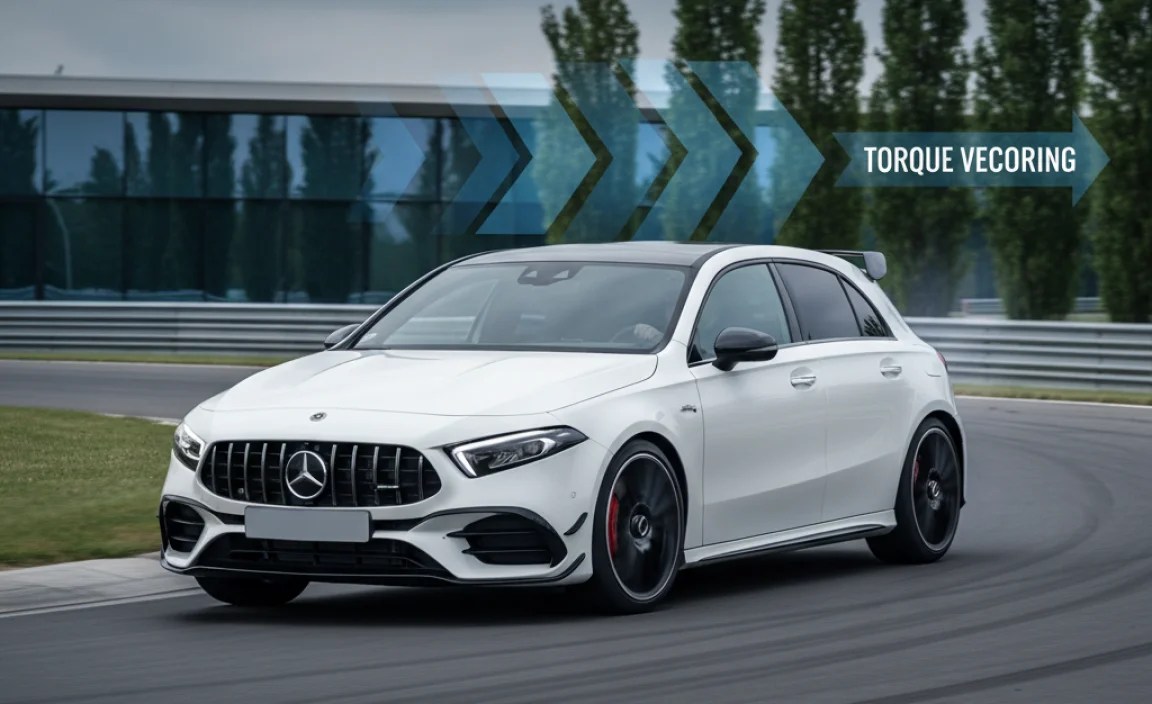
Torque Vectoring is a technology. It improves a car’s handling. It is especially useful when cornering. The Mercedes A Class uses Torque Vectoring. It helps the car turn more easily. It sends power to the wheels that need it most. When the car turns, the outside wheels travel farther. They need more power. Torque Vectoring recognizes this. It sends extra power to those wheels. This helps the car rotate. It makes the turn feel smoother and more controlled. It also reduces understeer. This is when the car wants to keep going straight. Torque Vectoring helps the car follow the driver’s intended path. This makes driving more fun and engaging. It gives the driver more confidence. The Mercedes A Class uses Torque Vectoring. It provides a better driving experience.
- Torque Vectoring improves handling during cornering.
- It sends power to the outside wheels when turning.
- This helps the car rotate more easily.
- It reduces understeer.
- The Mercedes A Class benefits from this technology.
Torque Vectoring works with other systems. It works with ESC. These systems work together. They provide a safe and enjoyable driving experience. For example, if the car starts to lose traction, Torque Vectoring can help. It can send power to the wheel. The wheel has the most grip. This helps the car stay stable. It prevents skidding. Torque Vectoring is not just for sporty driving. It can also be helpful in everyday situations. It can make the car feel more responsive. It can make it easier to maneuver in traffic. The Mercedes A Class uses Torque Vectoring. It enhances the driving experience. It makes it safer and more fun.
How Torque Vectoring Works in Detail
Let’s dive deeper into how Torque Vectoring works. It uses sensors to monitor the car’s behavior. It checks the wheel speed. It checks the steering angle. It checks the throttle position. This information is sent to a computer. The computer analyzes the data. It decides how to distribute power to the wheels. If the car is turning, it sends more power to the outside wheels. This is done using clutches. These clutches control the amount of power. It goes to each wheel. The system can adjust the power very quickly. It can make changes in milliseconds. This makes the system very responsive. It helps the car feel stable and controlled.
Benefits of Torque Vectoring
What are the benefits of Torque Vectoring? The biggest benefit is improved handling. The car feels more responsive. It turns more easily. This makes driving more fun. Torque Vectoring also improves safety. It reduces understeer. This helps the car stay on course. It prevents accidents. Another benefit is improved traction. If one wheel starts to slip, Torque Vectoring can help. It sends power to the wheel. The wheel has the most grip. This helps the car stay moving. Torque Vectoring can also improve fuel economy. It optimizes the power distribution. It makes the car more efficient. It is a win-win for drivers.
Torque Vectoring vs. Limited Slip Differential
Torque Vectoring is similar to a limited slip differential. But there are some key differences. A limited slip differential mechanically limits wheel spin. It sends power to the wheel. The wheel has the most grip. Torque Vectoring does this electronically. It uses sensors and clutches. This gives it more flexibility. It can adjust the power distribution. It is based on many factors. This includes the steering angle. It includes the throttle position. Torque Vectoring can also be more precise. It can send just the right amount of power. It is needed to each wheel. This makes it more effective. It is more efficient. Torque Vectoring is a more advanced technology.
Fun Fact or Stat: Torque Vectoring can improve cornering speed by up to 10%!
Optimizing Suspension for Stability
The suspension system is very important for stability. It keeps the tires on the road. This gives the driver better control. The Mercedes A Class has a carefully designed suspension. It balances comfort and handling. It uses special springs and dampers. These parts work together. They control the car’s movements. The suspension also reduces body roll. This is when the car leans in corners. Less body roll makes the car feel more stable. It makes it easier to control. The suspension works with other systems. It works with ESC and Torque Vectoring. These systems work together. They provide a safe and enjoyable driving experience. The Mercedes A Class suspension is designed for optimal performance.
- The suspension keeps tires on the road.
- It balances comfort and handling.
- Special springs and dampers control car movement.
- It reduces body roll in corners.
- The suspension works with ESC and Torque Vectoring.
- It provides a safe and enjoyable ride.
The Mercedes A Class offers different suspension options. These options allow drivers. They can customize the ride. They can change the handling. Some models have adaptive dampers. These dampers can adjust. They adjust to the road conditions. They adjust to the driving style. This provides a more comfortable ride. It also provides better handling. Other models have a sport suspension. This suspension is stiffer. It provides more control. It is best for drivers. They want a more sporty driving experience. No matter which option you choose, the suspension. It plays a key role. It plays a role in the Mercedes A Class stability.
The Role of Springs and Dampers
Springs and dampers are key components of the suspension. Springs absorb bumps in the road. They prevent the car from bouncing too much. Dampers control the movement of the springs. They prevent the car from oscillating. This creates a smoother ride. The Mercedes A Class uses high-quality springs and dampers. These parts are designed to work together. They provide a balance of comfort and control. The springs are made of steel. The dampers are filled with fluid. The fluid is forced through small openings. This creates resistance. It slows down the movement of the springs. This makes the ride more comfortable.
Adaptive Damping Systems
Adaptive damping systems are very advanced. They can adjust the damping force. They adjust to the road conditions. They adjust to the driving style. This provides a more comfortable ride. It provides better handling. The Mercedes A Class offers adaptive dampers. These dampers use sensors. The sensors monitor the car’s movements. They monitor the road surface. The computer analyzes this data. It adjusts the damping force. It does this in real-time. For example, if you are driving on a smooth road, the dampers will be soft. This provides a comfortable ride. If you are driving on a bumpy road, the dampers will be stiff. This provides more control.
Suspension Geometry and Stability
Suspension geometry is important for stability. It refers to the angles. It refers to the positions of the suspension components. These angles affect the car’s handling. They affect the car’s stability. The Mercedes A Class has a carefully designed suspension geometry. This geometry optimizes the car’s handling. It optimizes the car’s stability. For example, the camber angle is the angle of the wheel. It is relative to the road. A negative camber angle can improve grip. It is when cornering. The toe angle is the angle of the wheel. It is relative to the car’s centerline. A small amount of toe-in can improve stability. These angles are carefully adjusted. They provide the best possible handling.
Fun Fact or Stat: A well-tuned suspension can improve braking distance by up to 15%!
Driver-Assistance Systems and Control

Driver-assistance systems help drivers stay in control. These systems use sensors and cameras. They monitor the car’s surroundings. They provide warnings. They can even take action. They can prevent accidents. The Mercedes A Class offers many driver-assistance systems. These systems include lane keeping assist. They include blind spot monitoring. They include adaptive cruise control. These systems work together. They provide a safer driving experience. They give the driver more confidence. They help the driver stay alert. They reduce the risk of accidents. The Mercedes A Class is equipped with the latest technology. It helps drivers stay safe on the road.
| System | Description | Benefit |
|---|---|---|
| Lane Keeping Assist | Keeps the car in its lane. | Prevents unintentional lane departures. |
| Blind Spot Monitoring | Alerts driver to vehicles in blind spots. | Reduces the risk of lane change accidents. |
| Adaptive Cruise Control | Maintains a safe distance from other cars. | Reduces driver fatigue. |
| Automatic Emergency Braking | Applies brakes automatically in emergencies. | Prevents or reduces the severity of collisions. |
The driver-assistance systems in the Mercedes A Class. They are designed to be intuitive. They are not intrusive. They work in the background. They provide support when needed. The driver can adjust the settings. They can customize the systems. It does this to their preferences. Some drivers prefer more assistance. Other drivers prefer less. The Mercedes A Class allows drivers. They can choose the level of assistance. It best suits their needs. These systems are not a replacement for attentive driving. But they can provide an extra layer of safety. They can help prevent accidents. They can make driving more enjoyable.
Lane Keeping Assist in Detail
Lane Keeping Assist is a helpful system. It keeps the car in its lane. It uses a camera. It monitors the lane markings. If the car starts to drift out of its lane, the system takes action. It can gently steer the car back into the lane. It can provide a warning. The warning alerts the driver. Lane Keeping Assist is helpful. It is helpful on long drives. It can help prevent accidents. It is caused by driver fatigue. The system can be turned on or off. The driver can adjust the sensitivity. This is based on their preferences. Lane Keeping Assist is a valuable tool. It can help drivers stay safe.
Blind Spot Monitoring Explained
Blind Spot Monitoring is another useful system. It alerts the driver. It alerts them to vehicles. These vehicles are in their blind spots. The system uses sensors. These sensors are located in the rear bumper. They detect vehicles. They are in the adjacent lanes. If a vehicle is detected, the system provides a warning. The warning is a light. The light is in the side mirror. This alerts the driver. It does this before they change lanes. Blind Spot Monitoring can help prevent accidents. These accidents are caused by vehicles in blind spots. This system is especially helpful. It is helpful on highways. It is helpful in heavy traffic.
Adaptive Cruise Control: Staying Safe
Adaptive Cruise Control is a system. It maintains a safe distance. It maintains a safe distance from other cars. It uses radar. It uses cameras. It monitors the distance. It monitors the speed of the car. The car is in front. If the car in front slows down, the system slows down. It slows down the Mercedes A Class. It maintains a safe distance. If the car in front speeds up, the system speeds up. It speeds up the Mercedes A Class. It matches the speed of the car. Adaptive Cruise Control makes driving easier. It makes it more relaxed. It is especially helpful on long drives. It can also help in stop-and-go traffic. It reduces driver fatigue.
Fun Fact or Stat: Cars with driver-assistance systems have 40% fewer accidents!
Tire Technology for Enhanced Grip
Tires are important for stability. They provide the grip. The car needs to stay on the road. The Mercedes A Class comes with high-quality tires. These tires are designed for optimal performance. They provide good grip. They provide good handling. They provide good braking. The tires also have a big impact. They impact the car’s ride comfort. They impact the car’s fuel economy. Choosing the right tires is important. It is important for safety. It is important for performance. The Mercedes A Class offers different tire options. These options allow drivers. They can customize the car. They can make it suitable for their needs.
- Tires provide grip for stability.
- High-quality tires improve handling.
- Tires affect ride comfort and fuel economy.
- Choosing the right tires is important.
- The Mercedes A Class offers different tire options.
Tire technology is constantly improving. New tire designs are being developed. These designs provide better grip. They provide better handling. They provide better fuel economy. Some tires have special compounds. These compounds improve grip. They are on wet roads. Other tires have low rolling resistance. This improves fuel economy. The Mercedes A Class benefits from these advancements. It offers the latest tire technology. It provides a safe and enjoyable driving experience. The tires work with other systems. They work with ESC and Torque Vectoring. These systems work together. They provide optimal stability.
The Importance of Tire Pressure
Tire pressure is important. It is important for safety. It is important for performance. Underinflated tires can reduce grip. They can increase braking distance. They can also increase fuel consumption. Overinflated tires can reduce grip. They can make the ride uncomfortable. The Mercedes A Class has a tire pressure monitoring system. This system alerts the driver. It alerts them if the tire pressure is too low. This helps the driver maintain the correct tire pressure. It ensures optimal safety. It ensures optimal performance. Checking tire pressure regularly is a good habit. It can help prevent accidents. It can improve fuel economy.
Tire Tread Patterns and Grip
Tire tread patterns are designed. They are designed to channel water away. They are designed to provide grip. Different tread patterns are designed. They are designed for different conditions. Some tread patterns are designed for wet roads. They have lots of grooves. These grooves channel water away. They prevent hydroplaning. Other tread patterns are designed for dry roads. They have more contact area. This provides better grip. The Mercedes A Class comes with tires. They have a tread pattern. It is suitable for all conditions. This provides good grip. It provides good handling. It provides good braking.
Choosing the Right Tire Size
Choosing the right tire size is important. It is important for safety. It is important for performance. The Mercedes A Class has a recommended tire size. This size is listed in the owner’s manual. Using the wrong tire size can affect handling. It can affect braking. It can affect the speedometer. It can also damage the car. It is important to use the correct tire size. It is important for optimal performance. It is important for optimal safety. If you are unsure about the correct tire size, consult a professional. They can help you choose the right tires. They are for your car.
Fun Fact or Stat: Properly inflated tires can save you up to 3% on fuel costs!
Regular Maintenance: Keeping Stable
Regular maintenance is important for keeping the Mercedes A Class stable. This includes checking the tire pressure. It includes inspecting the suspension. It includes servicing the brakes. Regular maintenance helps ensure. It ensures that all the systems are working properly. It helps prevent problems. It can affect stability. Neglecting maintenance can lead to accidents. It can also reduce the lifespan. It reduces the lifespan of the car. Following the recommended maintenance schedule is important. It is important for safety. It is important for performance. The Mercedes A Class is a reliable car. It can last for many years. It lasts with proper maintenance.
- Regular maintenance keeps the car stable.
- Check tire pressure regularly.
- Inspect the suspension for wear and tear.
- Service the brakes to ensure optimal stopping power.
- Follow the recommended maintenance schedule.
The Mercedes A Class has a maintenance schedule. It is listed in the owner’s manual. This schedule outlines the services. These services are needed at different intervals. These services include oil changes. They include filter replacements. They include brake inspections. Following this schedule is important. It is important for keeping the car in good condition. It helps prevent problems. These problems can affect stability. Regular maintenance is an investment. It is an investment in your safety. It is an investment in the car’s lifespan. It is worth the time and effort.
Checking Tire Pressure Regularly
Checking tire pressure regularly is easy. It is important. You can use a tire pressure gauge. These gauges are inexpensive. They are available at most auto parts stores. Check the tire pressure. Do this when the tires are cold. This means they have not been driven on recently. The recommended tire pressure. It is listed on a sticker. The sticker is on the driver’s side doorjamb. Inflate or deflate the tires. It does this to the recommended pressure. Checking tire pressure regularly takes only a few minutes. It can make a big difference. It can affect safety. It can affect performance.
Inspecting the Suspension System
Inspecting the suspension system is important. It is important for detecting problems early. Look for signs of wear and tear. Check the shocks and struts. Look for leaks. Check the springs. Look for cracks. Check the bushings. Look for wear. If you notice any problems, have them repaired. Do this by a qualified mechanic. A worn suspension can affect handling. It can affect stability. It can increase the risk of accidents. Regular inspections can help prevent these problems. They can keep the car safe.
Servicing the Brakes for Safety
Servicing the brakes is important. It is important for safety. Brakes wear down over time. They need to be replaced. Check the brake pads. Check the brake rotors. Do this regularly. Look for signs of wear. If the brake pads are thin, replace them. If the brake rotors are damaged, replace them. Have the brakes serviced. Do this by a qualified mechanic. Worn brakes can reduce stopping power. They can increase the risk of accidents. Regular brake service can help prevent these problems. It can keep the car safe.
Fun Fact or Stat: Regular car maintenance can extend the life of your car by several years!
Summary
The Mercedes A Class has many features. They help enhance stability. These features include Electronic Stability Control (ESC). ESC helps prevent skidding. Torque Vectoring improves handling. It does this by distributing power to the wheels. The suspension system is designed. It is designed for optimal grip. It also reduces body roll. Driver-assistance systems provide extra support. These systems are in challenging driving situations. Tire technology is important. It is important for providing grip. It is also important for handling. Regular maintenance is essential. It ensures that all these systems are working properly. The Mercedes A Class is a safe and fun car to drive.
These Mercedes A Class cornering stability features work together. They provide a confident driving experience. Drivers can feel secure. They are in control. The combination of advanced technology. It makes the Mercedes A Class a leader. It is a leader in its class. It provides exceptional handling. It also provides stability. It is a top choice. It is a top choice for drivers. These drivers value safety. They also value performance.
Conclusion
The Mercedes A Class offers great stability. It does this through its advanced features. These features include ESC, Torque Vectoring, and a well-designed suspension. These systems work together. They give drivers more control. They make the car safer to drive. Regular maintenance is important. It keeps these systems working well. The Mercedes A Class cornering stability features. They enhance the driving experience. They provide peace of mind. You know that you’re in a safe, capable car.
Frequently Asked Questions
Question No 1: What is Electronic Stability Control (ESC)?
Answer: Electronic Stability Control (ESC) is a safety feature. It helps prevent skidding. It monitors the car’s direction. It also watches the steering wheel. If the car starts to slide, ESC takes action. It applies brakes to individual wheels. This helps the driver regain control. It works quickly and automatically. This makes it very useful. ESC is especially helpful on slippery roads. It can help prevent accidents in rain, snow, or ice. Many Mercedes A Class models include ESC as a standard feature. This helps ensure a safer driving experience.
Question No 2: How does Torque Vectoring improve cornering?
Answer: Torque Vectoring improves cornering by sending power. It sends power to the wheels. These wheels need it most. When the car turns, the outside wheels need more power. Torque Vectoring recognizes this. It sends extra power to those wheels. This helps the car rotate. It makes the turn feel smoother. It makes it more controlled. It also reduces understeer. This helps the car follow the driver’s intended path. In the Mercedes A Class, this results in more precise and enjoyable handling. It gives drivers more confidence when navigating turns and curves.
Question No 3: What role does the suspension play in stability?
Answer: The suspension system is very important for stability. It keeps the tires on the road. This gives the driver better control. The Mercedes A Class has a carefully designed suspension. It balances comfort and handling. It uses special springs and dampers. These parts work together. They control the car’s movements. The suspension also reduces body roll. This is when the car leans in corners. Less body roll makes the car feel more stable. It makes it easier to control. This contributes to a safer and more comfortable driving experience.
Question No 4: Are driver-assistance systems really helpful?
Answer: Yes, driver-assistance systems can be very helpful. They help drivers stay in control. These systems use sensors and cameras. They monitor the car’s surroundings. They provide warnings. They can even take action. They can prevent accidents. The Mercedes A Class offers many driver-assistance systems. These systems include lane keeping assist. They include blind spot monitoring. They include adaptive cruise control. These systems work together. They provide a safer driving experience. They give the driver more confidence. They help the driver stay alert.
Question No 5: How important are tires for cornering stability features in the Mercedes A Class?
Answer: Tires are crucial for cornering stability. They provide the grip. The car needs this to stay on the road. The Mercedes A Class comes with high-quality tires. These tires are designed for optimal performance. They provide good grip. They provide good handling. They provide good braking. The tires also have a big impact. They impact the car’s ride comfort. They impact the car’s fuel economy. Choosing the right tires is very important. It is important for safety. It is also important for performance. The right tires enhance the effectiveness of other Mercedes A Class cornering stability features.
Question No 6: What maintenance is needed to keep cornering stability features in good condition?
Answer: Regular maintenance is essential. It keeps the Mercedes A Class cornering stability features in top condition. This includes checking the tire pressure. It includes inspecting the suspension. It includes servicing the brakes. Regular maintenance helps ensure. It ensures that all the systems are working properly. It helps prevent problems. It can affect stability. Neglecting maintenance can lead to accidents. Following the recommended maintenance schedule is important. It is important for safety. It is important for performance. Proper maintenance ensures the longevity and effectiveness of these safety features.


