
Mercedes E Class AWD vs RWD: Ultimate Performance
For the Mercedes E-Class, AWD (4MATIC) offers superior all-weather traction and stability, enhancing grip in slippery conditions. RWD provides a more engaging, dynamic driving experience, often favored by enthusiasts for its purer handling characteristics. Your choice depends on driving priorities: all-weather capability or spirited performance.
Choosing between All-Wheel Drive (AWD) and Rear-Wheel Drive (RWD) for your Mercedes-Benz E-Class can feel like a significant decision, especially when performance is a top priority. Many drivers wonder which system truly delivers the ultimate driving experience. This article will demystify the differences between the E-Class’s AWD (known as 4MATIC) and RWD systems, explaining how each impacts performance, handling, efficiency, and suitability for different driving conditions. We’ll break down the engineering behind them and help you understand which one aligns best with your driving style and needs.
Why Does AWD vs. RWD in an E-Class Matter?

The drivetrain of a vehicle is its backbone, dictating how power is delivered to the wheels and, consequently, how the car behaves on the road. In a luxury sedan like the Mercedes-Benz E-Class, this choice is amplified. It’s not just about getting from point A to point B; it’s about the quality of that journey, the confidence you feel behind the wheel, and the car’s ability to perform across a spectrum of driving scenarios.
For some, especially those living in regions with unpredictable weather, the added security and grip of AWD are paramount. For others, the nuanced feedback and dynamic feel of RWD are non-negotiable for a true driver’s car experience. Understanding the core mechanics of each system is the first step to making an informed decision, ensuring your E-Class is perfectly suited to your lifestyle and driving aspirations. Let’s dive into how these two distinct approaches to putting power to the pavement shape the E-Class driving experience.
Understanding Rear-Wheel Drive (RWD)

Rear-Wheel Drive (RWD) is a classic automotive layout where the engine’s power is sent exclusively to the rear wheels. In the Mercedes-Benz E-Class, this setup is the traditional choice for many performance-oriented models and serves as the baseline for how the car is engineered to behave.
With RWD, the front wheels are solely responsible for steering, while the rear wheels handle both propulsion and, to some extent, influence the car’s balance and trajectory during cornering. This separation of duties can lead to a more balanced weight distribution and a feeling of greater connection between the driver and the road, particularly when pushing the car to its limits.
Key Characteristics of RWD in the E-Class:
- Driving Dynamics: RWD often provides a more engaging and sporty feel. Drivers can experience a sense of the car rotating around them during spirited driving, and it allows for a more direct feel through the steering wheel.
- Handling: In performance driving, RWD can be more predictable on the limit. Experienced drivers can use throttle inputs to help steer the rear of the car, a technique known as “power oversteer,” which can be used to rotate the car through corners.
- Weight Balance: RWD layouts can sometimes achieve a more ideal weight distribution between the front and rear axles, which is beneficial for handling and braking performance.
- Simplicity: Compared to AWD systems, RWD is mechanically simpler, which can sometimes translate to slightly better fuel efficiency and potentially lower maintenance costs, though this is less of a distinguishing factor in modern luxury vehicles.
While RWD offers a purity of driving experience that many enthusiasts crave, it can present challenges in low-traction situations. During acceleration in wet or slippery conditions, the rear wheels have a greater tendency to lose grip, potentially leading to wheel spin or a loss of traction that requires more driver intervention to manage.
Understanding All-Wheel Drive (AWD / 4MATIC)

Mercedes-Benz’s advanced AWD system is branded as 4MATIC. Unlike RWD, 4MATIC distributes power to all four wheels—front and rear—simultaneously. This sophisticated system continuously monitors driving conditions and can proactively adjust the torque split between the axles to optimize traction and stability.
The primary advantage of 4MATIC is its ability to enhance grip. By sending power to all wheels, it significantly reduces the likelihood of wheel slip in adverse conditions such as rain, snow, ice, or even during hard acceleration on dry pavement. This often translates to improved acceleration and more assured handling when grip is compromised.
Key Characteristics of 4MATIC in the E-Class:
- Traction and Stability: The most significant benefit is enhanced grip in virtually all driving conditions. This leads to greater confidence and security, especially in adverse weather.
- All-Weather Capability: Whether you face sudden downpours, icy roads, or snowy commutes, 4MATIC provides a substantial advantage in maintaining control and forward momentum.
- Improved Acceleration: By getting power down more effectively, AWD systems can often achieve quicker acceleration times from a standstill, as they minimize wheel spin under hard throttle.
- Performance Handling: Modern AWD systems, like 4MATIC, are not just about straight-line grip. They are engineered to distribute power intelligently, enhancing cornering stability and providing a secure feel even during spirited driving.
- Weight and Complexity: AWD systems add weight and complexity to the vehicle’s drivetrain. This can have a slight impact on fuel economy and may introduce more components that could require maintenance over the long term.
While 4MATIC makes driving easier and safer in challenging conditions, some purists argue that it can mask some of the finer nuances of a car’s handling. The constant intervention and power distribution, while beneficial for stability, can sometimes reduce the direct feedback and dynamic adjustability that a RWD car might offer under specific performance driving scenarios.
Performance Implications: Cornering and Handling
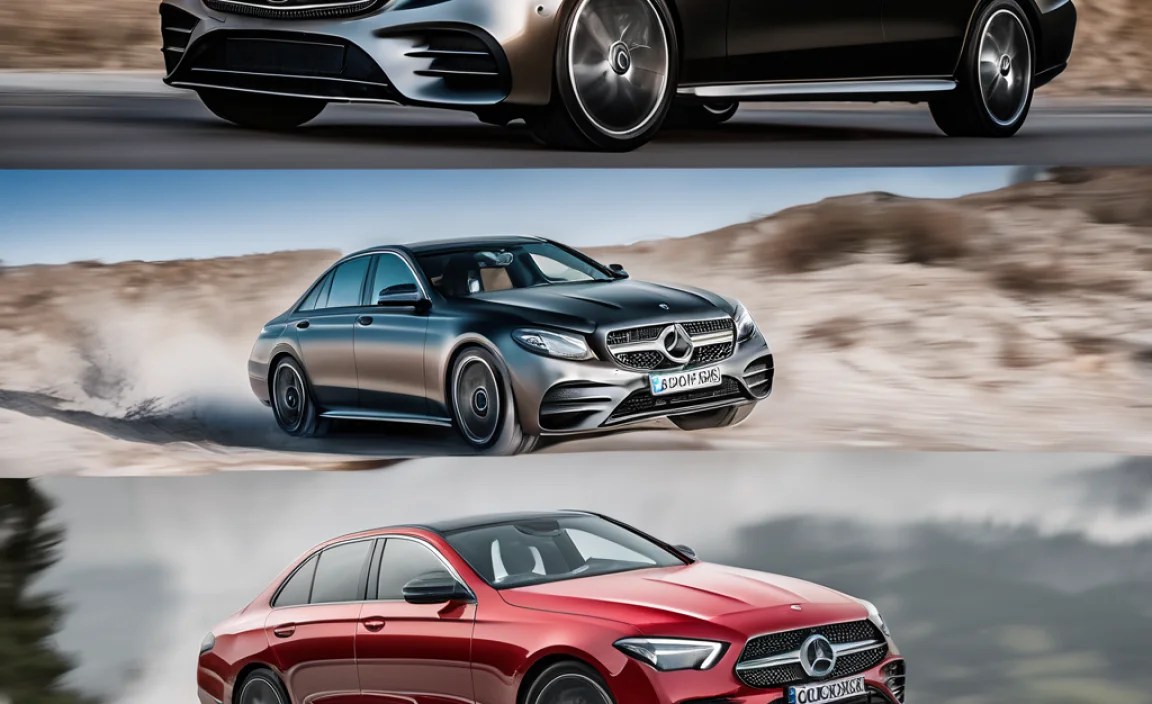
When it comes to performance, the nuances of RWD and AWD in the E-Class become particularly apparent. Both systems are designed to deliver excellent handling, but they achieve it through different means and offer distinct driving sensations.
RWD Performance Driving Advantage
For drivers who seek maximum engagement and a visceral connection to the road, RWD often takes the lead. In an RWD E-Class, the steering feel is typically more pure because the front wheels are not burdened with sending power to the ground. This allows them to focus solely on directional input.
During spirited cornering, a RWD E-Class can feel more agile and responsive to throttle inputs. Enthusiasts can use the accelerator pedal to subtly adjust the car’s attitude through a turn. If traction is lost at the rear, it can be a controlled drift or slide, which, for those with the skill, is an exhilarating aspect of performance driving. This characteristic is often celebrated in performance sedans and sports cars. The weight transfer during cornering in a RWD car can also feel more natural and predictable to some drivers, contributing to a more dynamic, engaging experience.
AWD (4MATIC) Performance Grip Advantage
The 4MATIC system, while designed to be sophisticated and unobtrusive, provides a different kind of performance advantage: sheer grip. In a corner, especially on a less-than-perfect surface or if exiting the corner with significant throttle, 4MATIC’s ability to distribute torque to all four wheels means less chance of the inside rear wheel spinning or the front wheels losing steering traction.
This results in higher cornering speeds and greater confidence, particularly when pushing the car hard in conditions that might challenge a RWD vehicle. Acceleration out of corners is often stronger with 4MATIC because power can be more effectively put down to the road. While it might feel less “playful” than RWD, the 4MATIC system’s ability to maintain traction and stability allows for incredibly high levels of performance to be accessed by a wider range of drivers, in a broader set of conditions. Mercedes-Benz engineers their 4MATIC systems to be rear-biased, meaning that under normal driving, more power typically goes to the rear wheels, retaining a degree of that RWD driving feel while still offering the benefits of all-wheel traction when needed.
Handling Comparison: RWD vs. 4MATIC
| Feature | Rear-Wheel Drive (RWD) | All-Wheel Drive (4MATIC) |
|---|---|---|
| Steering Feel | Generally more direct and pure, as front wheels solely handle steering. | Can be slightly less direct due to power delivery to front wheels, but modern systems minimize this effect. |
| Cornering Dynamics | More agile, allows for throttle-induced rotation (oversteer). More engaging for enthusiasts. | Higher cornering speeds possible due to enhanced grip. More stable and predictable, especially at the limit. |
| Traction Under Acceleration | More prone to wheelspin, especially from a standstill or out of corners. | Significantly better traction, minimizing wheelspin and maximizing forward thrust. |
| Low-Traction Conditions | Requires more driver skill to maintain control. Can be challenging in snow, ice, or heavy rain. | Superior grip and stability. Ideal for adverse weather conditions and increased confidence. |
| Driver Engagement | Higher level of connection, rewarding skillful driving. | More confidence-inspiring and easier to drive quickly for most drivers. |
| Weight Distribution | Can achieve excellent balance, beneficial for handling. | Slightly heavier and more complex drivetrain. |
Traction and All-Weather Capability

This is arguably the most significant differentiator when comparing RWD and AWD for any vehicle, and the Mercedes-Benz E-Class is no exception. The choice here often boils down to your driving environment and your tolerance for risk in less-than-ideal conditions.
RWD in Challenging Conditions
Rear-Wheel Drive, while a purist’s delight on dry pavement, can become a test of skill and nerve when traction is compromised. In wet weather, the rear tires have less grip, making them more susceptible to spinning under acceleration. Imagine accelerating from a stoplight in heavy rain; the rear end might feel light, and wheel spin could occur, requiring you to ease off the throttle significantly.
When snow and ice enter the equation, RWD vehicles without specialized tires can struggle immensely. The rear wheels, responsible for putting power down, have a hard time finding grip, making it difficult to get moving from a standstill or maintain control when braking or accelerating. While modern electronic stability programs and traction control systems do an admirable job of mitigating these issues, they ultimately rely on the tires’ ability to grip the road. In very slippery conditions, a RWD car will always have a harder time than an AWD car putting power down effectively.
AWD (4MATIC) for Ultimate Confidence
The 4MATIC all-wheel-drive system is precisely engineered to conquer these challenges. By distributing power to all four wheels, it dramatically increases the available traction. In wet conditions, the system ensures that power is always being delivered to the wheels that have the most grip, significantly reducing the chance of wheel spin and enhancing stability during acceleration and cornering.
When faced with snow or ice, the advantage of 4MATIC becomes even more pronounced. It allows the E-Class to put power down more effectively, enabling confident acceleration and the ability to maintain momentum where a RWD vehicle might be helplessly stuck. This not only means getting to your destination but doing so with a greater sense of security and control. Mercedes-Benz’s 4MATIC is also an intelligent system, often featuring sophisticated electronic and mechanical differentials that can vary torque distribution to optimize grip in real-time. For drivers in regions prone to inclement weather, 4MATIC is an almost indispensable feature for ensuring safety and usability year-round. To learn more about advanced drivetrain technologies, resources like NHTSA’s insights on All-Wheel Drive can provide valuable context on safety benefits.
Fuel Efficiency and Maintenance
When considering any vehicle, particularly a luxury sedan like the E-Class, fuel efficiency and long-term maintenance costs are important factors. The choice between RWD and AWD can have a tangible impact on both.
RWD: Efficiency and Simplicity
Generally speaking, a Rear-Wheel Drive system is mechanically simpler and lighter than an All-Wheel Drive system. This simplicity often translates into slightly better fuel efficiency. The RWD E-Class has fewer components involved in transferring power to the wheels. There’s no additional driveshaft running to the front axle or complex differentials and power-take-off units that come with AWD.
From a maintenance perspective, a RWD system typically has fewer parts that can wear out or require servicing. This can sometimes lead to lower maintenance costs over the vehicle’s lifespan. For example, there’s no need to service front differential fluid or associated AWD components. This makes RWD a slightly more straightforward and potentially less expensive option to own and operate in the long run, assuming similar mileage and driving habits.
AWD (4MATIC) Considerations
The 4MATIC system, while offering significant advantages in traction and performance, introduces added complexity and weight. The additional driveline components—like the transfer case and front driveshafts—require energy to rotate, which can consume a small amount of extra fuel compared to their RWD counterparts. The added weight can also slightly impact fuel economy.
Maintenance for an AWD system involves more components. Regular attention to the transfer case fluid, front differential fluid, and potentially other specialized AWD components will be necessary over the vehicle’s life. While Mercedes-Benz vehicles are built to rigorous standards, these extra maintenance items can contribute to a slightly higher overall cost of ownership compared to a RWD vehicle. However, it’s important to note that the differences in fuel economy between RWD and 4MATIC E-Class models are often marginal in everyday driving, with modern AWD systems being highly optimized for efficiency.
Efficiency and Maintenance Comparison
| Factor | Rear-Wheel Drive (RWD) | All-Wheel Drive (4MATIC) |
|---|---|---|
| Mechanical Complexity | More straightforward and fewer components. | More complex, with additional components (transfer case, front driveshafts, etc.). |
| Vehicle Weight | Generally lighter. | Generally heavier due to added driveline components. |
| Fuel Efficiency | Typically offers slightly better MPG due to less parasitic loss. | Typically slightly lower MPG due to increased weight and drivetrain drag. |
| Maintenance Items | Fewer components requiring specific service (e.g., no front differential, transfer case). | Additional items requiring periodic service (e.g., transfer case fluid, front differential fluid). |
| Long-Term Cost | Potentially lower maintenance and fuel costs. | Potentially slightly higher maintenance and fuel costs, though often marginal. |
Who Should Choose Which System?
The decision between AWD (4MATIC) and RWD for your Mercedes-Benz E-Class isn’t about absolute superiority; it’s about suitability for your individual circumstances and preferences. Here’s a guide to help you decide:
Choose RWD If:
- You prioritize engaged driving dynamics: You enjoy the feel of a car responding directly to your inputs and appreciate the nuances of throttle control in corners.
- You live in a mild climate: Your driving environment is primarily dry and temperate, with infrequent encounters with snow, ice, or heavy rain.
- Pure performance feel is key: You want the most direct and unadulterated driving experience that a RWD platform can offer, without the interventions of an AWD system.
- Fuel economy and lower maintenance are top priorities: While the differences may be small, RWD offers a slight edge in these areas.
- You enjoy winter driving experience: With appropriate winter tires, you are comfortable managing a RWD vehicle in lighter snow conditions and prefer a more direct connection to the road.


